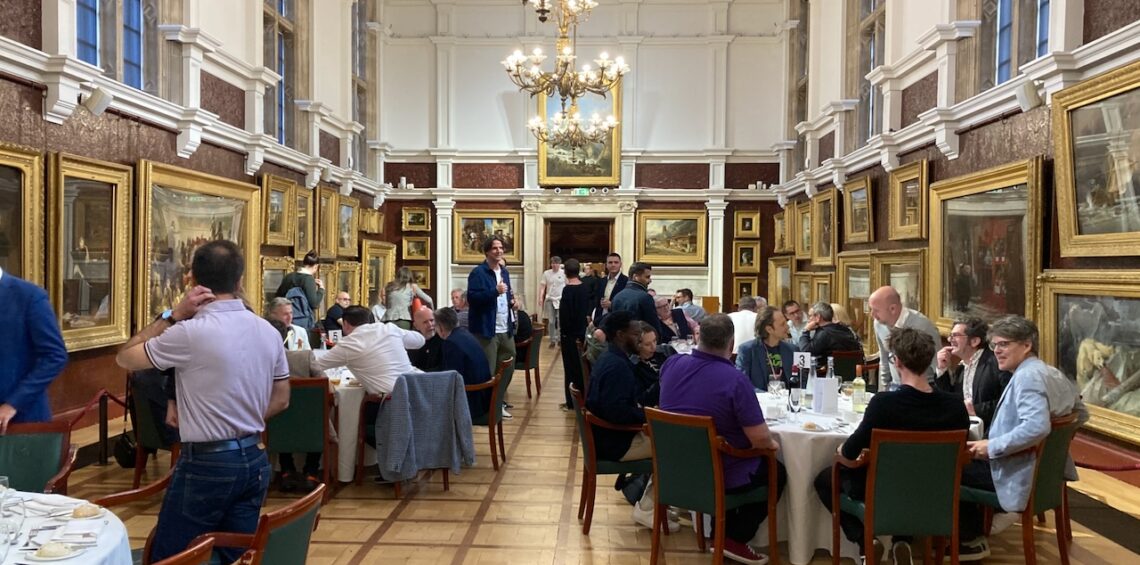
ASC International Conference 2024 – Day 1 Write Up
By Katie O’Connor, Bounce Insights and ASC
The ASC’s 8th International Conference, “The Power to Transform Research,” brought together a vibrant mix of industry leaders, researchers, and innovators at the Royal Holloway, University of London. The first day was a showcase of how cutting-edge technology and creative approaches are shaping the future of the insights industry. Here’s a look at the presentations and discussions from Day 1.
Note: This summary highlights key points from each presentation on the first day of the conference. You can watch the video for each presentation on the ASC YouTube channel or watch them all in sequence in this YouTube playlist. For more in-depth information, please check the conference programme, which contains links to each speaker’s biography and abstracts for their presentation.
Keynote Address: “Global Connections, Local Power: How PepsiCo Digitalized its Insights”
Steve Phillips, CEO, Zappi
Steve Phillips kicked off the conference with a captivating keynote on PepsiCo’s journey to harmonise local insights with global strategies. With the help of Zappi, PepsiCo empowered its local teams to drive research initiatives while maintaining a unified methodology globally. This strategic shift has allowed PepsiCo to build a robust global data source, ensuring local insights align seamlessly with overarching business goals.
“Persona Grata: Can AI Personas Help Accelerate R&D?”
Alexandra Kuzmina, Innovation Associate Director, MMR & Jake Schneider, Gosh! Food
Alexandra Kuzmina and Jake Schneider delved into the potential of AI-generated personas to streamline research and development. Through their work with Gosh! Food, they demonstrated how these AI personas, built on segmentation data, can quickly provide feedback on product concepts. While not yet a substitute for comprehensive consumer surveys, these personas offer a dynamic tool for rapid iteration and refinement in product development.
“Evaluating Verbatims with Large Language Models”
Orkan Dolay, Bilendi
Orkan Dolay shared insights into how Bilendi is leveraging AI to enhance sentiment analysis. By experimenting with various AI models, they developed BARI, a tool that combines Bilendi’s in-house sentiment analysis with advanced large language models. This innovation allows for more accurate and nuanced classification of open-ended responses, making it possible to analyse qualitative data at scale with greater precision.
“Every Library Deserves a Librarian: Bringing Digital Archives to Life with AI & Vector Databases”
Jim Whaley & Erik Larsen, Ovation MR
Erik Larson showcased how with Jim Whaley and the rest of the Ovation MR team they transformed the AMSR database into a more accessible resource using AI and vector databases. By vectorizing this vast archive, they created a digital librarian capable of answering complex queries about historical data. This approach makes it easier to explore and understand past trends and sentiments, turning static records into a dynamic research tool.
“Flexible and Dynamic Automated Reporting Done Right!”
Benjamin Rietti, E-Tabs & Susan Collicott, Escalent
With less than a week’s notice, Benjamin Rietti stepped in to present how E-Tabs’ automation solutions streamline the final stages of research projects. (Special thanks, Benjamin!) Alongside pre-recorded insights from Susan Collicott, he showcased a case study where E-Tabs automated the transformation of raw data into polished presentations and dashboards. This process significantly boosts productivity and enhances data quality. By automating reporting, researchers can concentrate more on deriving insights rather than on the mechanics of creating presentations.
“AI Meets Alpha: Crafting Kid-Centric AI Research”
Richard Owen, Qualify and The Pineapple Lounge
Richard Owen addressed the challenges and ethical considerations of using AI moderation with children, along with the 6 key principles developed by The Pineapple Lounge to ensure a positive experience for young participants. The AI moderator is customised to match the developmental stage of the children involved. However, Owen emphasised the critical importance of transparency, ensuring children understand they are interacting with AI and not a human moderator.
“The Digital Arms Race: How Technology Empowers Fraud in Research”
Eva Wittman, Ipsos
Eva Wittman highlighted the evolving challenges of detecting and preventing fraud in research. She discussed various fraud techniques, from AI-generated responses to identity theft tools, that pose a threat to data integrity. Wittman emphasised the importance of developing advanced strategies to stay ahead of these evolving threats and maintain the credibility of research data.
“Generating Reliable Synthetic Data: How Challenges Can Be Addressed with Improved Survey Design”
Jon Puleston, Vice President Innovation, Kantar Profiles
Jon Puleston presented the findings of his experiments, which explored the use of synthetic data to predict responses to unasked questions in surveys. He discovered that synthetic data can sometimes achieve this, but success depends on having access to the appropriate variables. For instance, variables like gender and age may not accurately predict something unrelated, such as dog ownership. Moreover, Jon noted that currently, synthetic data may not outperform other established analytical methods in terms of predictive accuracy.
“Online Data Quality – Are We Asking the Right Questions?”
Chris Stevens & Debrah Harding, MRS
Chris Stevens and Debrah Harding introduced the MRS Global Data Quality (GDQ) initiative, aimed at improving survey data quality. They shared insights from a recent audit that revealed issues within the sample ecosystem and highlighted the upcoming tools GDQ is developing to address these challenges. Their efforts focus on making the survey process more transparent and trustworthy, advocating for stronger measures against research fraud.
“Humans and AIs: Assembling the Best Team”
Daniel Cunill & Orkan Dolay, Bilendi and Respondi
Daniel Cunill and Orkan Dolay explained how AI moderators are enhancing qualitative research at Bilendi and Respondi. These AI moderators interact with respondents in real-time, providing responses that are both fast and personalised. Their work illustrates how combining human expertise with AI capabilities can lead to more efficient and engaging data collection processes.
Workshop: “Co-Creating a Higher Standard of Participant Experience”
Paul Hudson, FlexMR
Paul led an engaging workshop on enhancing participant experience in surveys. Trade-offs between research needs, business objectives, and participant experience often result in compromises that overlook participant satisfaction. The workshop simulated survey design negotiations, demonstrating that participant absence leads to subpar outcomes. Hudson advocated for the creation of a Survey Quality Score to ensure that participant experience is prioritised, which could lead to more effective and engaging surveys.
“But We’ve Always Done It This Way”
Dean Crawley, Legends International
Dean Crawley from Legends International shared their journey in adopting innovative methodologies like adaptive conjoint analysis. He highlighted the importance of building trust and buy-in from stakeholders to successfully implement new research techniques. Crawley’s presentation showed that embracing change can lead to significant improvements in research outcomes.
Panel: “Permission to Fail: Supporting Innovation in Research”
Panellists: Niall Smith (Sketchbook), Jack Bowen (CoLoop.ai), Richard Owen (Firefish), Rebecca Cole (Cobalt Sky), Danny Russell (DRC)
The panel discussion centred on creating a culture that supports innovation in research. Panellists discussed the industry’s traditional risk-averse mindset and how allowing space for experimentation can foster creativity and progress. They highlighted the importance of dedicating time and resources to innovation, even on a small scale, to encourage a more flexible and forward-thinking approach.
“Participant Problems? It’s Us, We’re the Problem, It’s Us”
Shifra Cook, CEO and Founder, Ayda
Shifra Cook shared her insights into how Design Thinking principles have helped Ayda better understand and meet the needs of its participants. By focusing on prompt payment, easy communication, and preferred incentives, Ayda has significantly improved participant engagement and satisfaction. Cook’s approach underscores the value of addressing participant needs to enhance the overall research experience.
“How to Make Survey Rewards Meaningful and Engaging”
Frank Kelly, Virtual Incentives
Frank Kelly presented findings from a study on what survey participants value most in rewards. He discussed the importance of understanding the perceived value exchange for participants’ time and effort. Kelly’s insights into demographic preferences for different types of incentives provide practical guidance for making survey participation more appealing and rewarding.
“Transforming Society Through Data”
Emily Bushby, Deputy CEO, Nesta and BIT
Emily Bushby closed the day with an inspiring look at how Nesta is using data to drive positive societal change. From promoting healthier eating habits with supermarket data to identifying at-risk children through predictive dashboards, Nesta’s work demonstrates the powerful potential of data to improve lives and support sustainable development.
Day 1 of the ASC International Conference offered a wealth of insights into the evolving world of research. With presentations that spanned AI innovations, data ethics, and societal impacts, attendees left with fresh perspectives and ideas on how to navigate the future of the insights industry.
To view the video recordings of the presentations please visit our YouTube channel here.