Symbiosis at Work: Humans and AI can Grow Better Teams Together by Zsolt Kiss
Our experience shows that AI in research works best when it is developed at the cutting edge of delivery and in a way that is informed by project needs. When AI is built at a distance, it is more likely to drift into general capability that is less useful in practice. Rolling out AI close to delivery requires integrated teams that include both technical and research expertise.
This session draws on practical experience of building “symbiotic” teams where technical specialists work side-by-side with researchers and methodologists. We discuss how methodological judgement is built into AI-enabled delivery: agreeing what “good” looks like up front, using clear QA checkpoints through the work, and pairing technical staff with senior expertise. We also explore the dynamics that make or break symbiosis: status, trust, competing definitions of value, confidence, and the balance between speed and rigour.
We end with a caution and a longer-term question. Symbiosis works today largely because experienced researchers can guide technical delivery and anchor standards. But if AI reduces the volume of junior, hands-on work through which researchers traditionally learn the craft, the pipeline that produces those experts may weaken. The industry therefore needs team models that do two things at once: deliver high-quality AI-enabled work now, and actively reproduce the methodological capability that quality will depend on in the future.
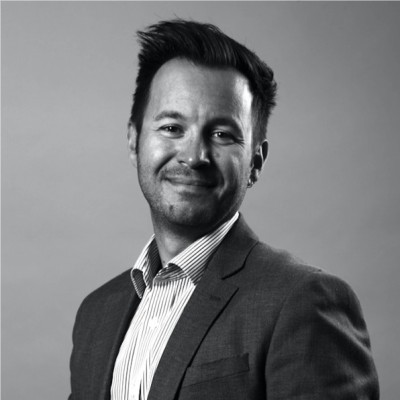
Zsolt Kiss
Zsolt Kiss is a data scientist and research methodologist working at the intersection of applied AI, behavioural science and data science, with a focus on social and evaluation research. He started his career in academia and was a Marie Curie Research Fellow at the University of Oxford, before working at Bain & Company and later serving as Research Director at NatCen Social Research. He founded ZK Analytics (now trading as o-x.ai) in 2014.
Since 2023, he has focused on applying AI in research without compromising quality standards, and developed signAl™, an AI-enabled research tool designed to extract robust insight from any type of unstructured data, at scale. He contributes to research standards as a member of the ISO 20252 working group and as a Board Member of MRQSA.