
Viewpoint: The junior talent problem
As AI Automates the Tasks That Train Junior Researchers, How Do We Develop the Next Generation?
By Vivek Venktachalam
Market research is undergoing a significant shift following the rise of AI, and the consequences extend far beyond efficiency. AI tools are transforming our industry at an unprecedented pace, automating survey scripting, data cleaning, basic crosstabs, sentiment analysis, and even initial insight generation. What once took a junior researcher weeks to do can now be accomplished in hours, often with greater consistency and scale.
As a Tech Ops and Services leader, I have been a vocal champion of AI adoption. The efficiencies are real and transformative. Tools now handle quite a lot of tasks at speeds that would have seemed impossible just a few years ago.
This is the junior talent paradox. How we respond will determine whether AI becomes a genuine multiplier of human capability or a subtle eroder of it.
From an operational lens, this is a massive win: faster delivery, stronger margins, happier clients, and more bandwidth for the high-stakes strategic work that truly moves businesses forward. They free us to focus on what truly differentiates great research: strategic counsel, nuanced interpretation, creative problem-solving, and deep client partnership.
Yet as someone responsible for building sustainable organisations, I also see the quieter risk emerging. We have automated the foundational “training wheels” that shaped generations of researchers. The very tasks that have historically served as the rigorous training ground for our next generation of researchers are disappearing.
How do we ensure that the talented young professionals entering our field today develop the depth, judgment, and resilience needed to become tomorrow’s leaders? This is the junior talent paradox facing our industry, and how we respond will determine whether AI becomes a genuine multiplier of human capability or a subtle eroder of it.
The Foundations We’re Losing
Think back to your own early career. For many of us, those first roles involved the grind: meticulously designing questionnaires, chasing down respondents, scrubbing messy datasets, running endless tabs, and learning through iteration why a particular weighting scheme mattered or how a subtle question phrasing could skew an entire study.
This wasn’t just busy work. It was how cognitive muscle memory developed. These tasks taught attention to detail, an intuitive feel for data integrity, the art of asking better questions, and how critical thinking and judgment about research methods became instinctive.
AI excels precisely at these repeatable, rules-based activities within minutes. The result? Fewer entry-level positions focused on actual execution. Industry observations and broader labor data show entry-level opportunities contracting in analytically oriented fields, including aspects of market research and insights.
Juniors are increasingly asked to “add value” immediately, with the workflow cycle simply being prompting tools, editing outputs, and moving on. Editing is a valuable skill, but you cannot edit your way to becoming a visionary researcher.
This creates a dangerous gap. Without foundational experience, how do emerging researchers develop deeper understanding to challenge AI outputs, spot biases in training data, or put disparate findings together into actionable business strategy? We risk a future where our teams are highly proficient at prompting tools but lack the grounded expertise to know when those tools are leading us astray.
Why This Matters for the MR Industry
Market research succeeds only when human judgment elevates data into meaning and judgment cannot be automated. Our value lies in bridging data and human decision-making, understanding not just what consumers say or do, but why, and what it means for business strategy in an increasingly complex world. AI is an extraordinary co-pilot, but it cannot replicate lived experience, creative thinking, or the ability to navigate ambiguous client needs.
Human judgment, creativity, and storytelling are what separates good research from great research. A weakened junior pipeline threatens our long-term innovation capacity. Juniors bring fresh perspectives, digital-native intuition, and a willingness to question legacy approaches, qualities that keep our industry vibrant. They are also the talent who will one day lead client relationships, mentor others, and drive the next wave of methodological advancement. Neglecting this pipeline isn’t just a hiring issue; it’s a sustainability issue for the entire profession.
The senior leaders who learned in the pre-AI era won’t be around forever. When they retire, who will replace them with equivalent depth? We cannot allow technological progress to outpace our investment in people.
The solution is…to reimagine how we build expertise in an AI-augmented world.
A New Playbook for Developing Talent
The solution is not to slow AI adoption or artificially preserve outdated tasks. It’s to reimagine how we build expertise in an AI-augmented world using the time and resources AI frees up to create a better development model.
Here are some practical steps that I believe every forward-thinking MR organisation should consider:
Shift from execution to judgment
Let AI generate the first drafts, for example, three alternative survey versions, multiple insight summaries, or different segmentations. Juniors then audit, compare, critique, and write a concise memo on strengths, weaknesses, risks, and recommendations. This builds critical thinking and decision-making muscles far faster than any algorithm ever could.
Shift juniors from sheer execution to “AI oversight” and higher-order work earlier. Assign them to review AI-generated outputs for accuracy and relevance, design hybrid human-AI research programs, and lead small client debriefs. Create deliberate “apprenticeship” projects where they must defend findings in front of senior stakeholders building communication and critical thinking muscles that no algorithm can replace.
Accelerate real-world exposure
Bring juniors into client meetings, insight framing sessions, and debriefs much earlier, not just as observers, but with meaningful roles in preparation, real-time note-taking, question framing, and post-meeting work. Let them witness experienced researchers reading the room, addressing skepticism, connecting disparate dots, and turning data into business impact.
Create safe failure sandboxes
Foundational learning requires room to make mistakes. Establish internal sandboxes for methodology testing, pilot studies, or pro bono work for nonprofits. Encourage “failure autopsies” where teams dissect what went wrong (or right) without career repercussions. This builds the resilience and intellectual curiosity our industry needs. Allocate protected time for juniors to do things the “hard way” on internal projects, manually manipulate datasets, design and execute small pilot studies, or test alternative approaches even when AI could do it faster. Treat this as R&D for human capital.
Strengthen mentorship and rotations
Formalise mentorship programs with clear accountability. Pair juniors with experienced researchers on live projects, requiring regular debriefs on decision-making (“Why did we choose this sampling approach?”). Implement rotational programs across functions (client services, analytics, consulting, operations) so they gain a holistic view of the business. In my experience, exposure to real client pressure and cross-functional collaboration accelerates growth far more than isolated task repetition.
Evolve recruitment and partnerships
Collaborate with universities to update curricula with applied AI projects, client simulation labs, and real-world data challenges. Reimagine internships as immersive experiences rather than task farms. Broaden our talent pools beyond traditional profiles to include strong critical thinkers from psychology, design, philosophy, and data science who can be trained in our craft.
Leverage AI as a teaching tool
Treat AI literacy not as a nice-to-have but as foundational training. Teach juniors prompt engineering, bias detection, tool evaluation, and ethical considerations. Make them responsible for maintaining “human-in-the-loop” protocols. The best researchers of tomorrow will be those who master the balance between human insight and machine efficiency.
As leaders, we must track talent development metrics alongside billability and project delivery. Recognise managers who successfully grow their teams. Tie part of performance reviews and promotions to mentorship outcomes. The organisations that thrive will treat people’s development as a core business competency, not an HR checkbox. Organisations that treat talent development as a core strategic imperative will emerge with more resilient teams, higher-quality insights, and deeper client partnerships.
Looking Ahead with Optimism and Resolve
The AI revolution in market research is not a zero-sum game. It offers the potential for more impactful work, faster iteration, and deeper strategic influence, but only if we adapt thoughtfully. By proactively addressing this problem, we can build a stronger, more capable workforce. One that leverages technology without losing the human edge that defines exceptional research.
If AI is the engine of our future, talent is the steering wheel.
This challenge demands collective action, from individual firms investing in their people, to industry associations fostering shared best practices, to clients who value partners with robust talent pipelines.
I am personally committed to driving this evolution in my own organisation and urge my peers to do the same. The next generation is talented, curious, and eager. Our job is to provide the right scaffolding, not the old one, but a more intentional, effective one suited to this new era. If AI is the engine of our future, talent is the steering wheel. We cannot afford to lose our grip.
This article reflects on the author’s experiences building teams in the market research and insights industry. Views are the author’s own.
Main image by Anna Tarazevich
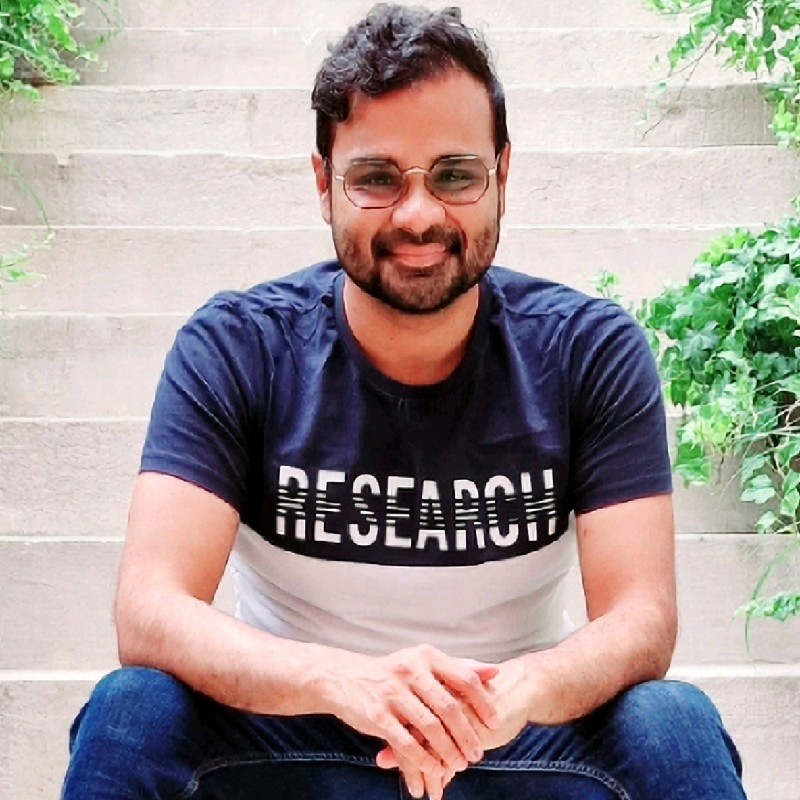
Vivek Venktachalam leads MR Quant Technical Services at Qualtrics across the EMEA region, overseeing delivery operations, automation initiatives, and service transformation programs.
An advocate for responsible AI adoption, he is particularly interested in how organisations can leverage emerging technologies to enhance, rather than replace, human expertise.
Vivek can be contacted via his profile at LinkedIn.